

Your first mediation meeting is booked. Before you arrive, decide what you want to understand, which records would help and who can approve a practical next step. You can prepare while some facts remain uncertain. Bring a clear account of what you know, the questions you still have and the arrangements that will help you participate. A useful first meeting may establish a workable next action while larger questions need further investigation.
Consider a fictional business dispute. Maya wants an explanation for withdrawals from the company account. Ido wants to know who will pay the supplier on Thursday. Each could spend the meeting proving that the other has handled the business badly. They could also identify the bank statement they both need and discuss the urgent supplier payment while the wider dispute is investigated. Preparing those two questions gives the meeting a starting point without requiring either person to accept the other's account in advance.
Use the checklist on this page to prepare for a family, business or neighbourhood meeting. Build two agenda questions, compare the fee proposals you received and practise the opening conversation. Each tool produces text you can read and edit before copying, printing or selecting it for sharing. Choose the parts that help the person you intend to send it to.
Read the invitation before collecting documents
Start with the actual invitation. Identify who sent it, the setting in which the meeting was arranged and what you have been asked to do. A privately arranged mediation, an introductory conversation, a court referral and a meeting at a family assistance unit can involve different requirements. Keep the invitation and any accompanying instructions together. If the meeting relates to an existing case, check the case documents as well as the message confirming the appointment.
Ask whether the first contact is a joint meeting or an individual preparation conversation. Confirm the time reserved, the intended participants and any charge for reviewing material beforehand. The expression short introduction can describe very different bookings. Clarifying the appointment helps you decide whether to bring a single question or prepare a more extensive account. Ask who will contact the other participants and whether you should send anything before the meeting.
For an official summons, read the relevant instructions and consult the person advising you about the case. The MAHUT meeting guide and the family dispute application guide address those distinct settings. Arranging a private conversation does not itself establish that another deadline has changed. Verify any filing or hearing dates separately.
Choose an outcome you can recognise
Wanting the whole dispute resolved is understandable. For the first meeting, identify one improvement you could recognise when you leave. It might be obtaining an explanation of three account entries, finding a way to coordinate next week's collection or agreeing who will investigate a financial question. A defined outcome helps you decide which material to prepare and whether a proposed discussion actually advances the issue that brought you there.
Write the outcome as an action. Instead of asking someone to understand everything you have experienced, identify a point you want them to answer. You might explain how a changed collection time affects your work and ask which alternatives they could consider. In a business dispute, you might ask when a particular report can be supplied. This gives the other participant something specific to respond to while leaving room to explain why it matters.
Check whether the outcome depends on someone who will not attend. A partner may be able to explain a transaction but need the bookkeeper to retrieve supporting records. The achievable first step could therefore be agreeing how to obtain those records. Return to your intended outcome at the end of the meeting and identify what changed, what remains uncertain and what needs to happen next.
Divide preparation into manageable tasks
Separate collecting, writing and arranging. Collect the records relevant to the immediate question. Write a short account of events and the two issues you most want to discuss. Arrange attendance, language, location and any support you need. Keeping these tasks distinct helps you identify what is actually missing. Reading the same message thread repeatedly may feel like preparation while leaving the practical arrangements and central question unresolved.
You can set your own preparation schedule. For example, reserve twenty minutes to identify the main records, fifteen to write a chronology and ten to confirm the appointment details. Those times are a planning example. Increase them when the documents or arrangements require it. Leave time to ask for something that another person must supply. Mark any item that cannot be completed before the appointment so you can explain the gap.
Keep one accessible preparation note. Record the meeting details, your opening question and the documents you intend to refer to. Add a separate list for issues that require advice or permission before discussion. This makes it easier to prepare without treating every concern as something you must solve alone before entering the room. Update the note when new information changes the question.
Make a chronology another person can follow
Choose the events needed to explain the present disagreement. For each event, note when it occurred, what you observed and which record supports your account. Where a date is uncertain, say so. A short chronology is useful because participants may agree that an event happened while disagreeing about its meaning. Keeping the observation separate from your explanation lets the meeting identify where the accounts actually diverge.
For instance, a statement that an invoice arrived on Monday and payment was requested on Tuesday can be checked against the messages. A statement that the sender intended to put pressure on you adds an interpretation. You may want to discuss the effect of the request, but the date and wording should remain identifiable. Include enough context to understand a message rather than relying on a cropped sentence whose subject is unclear.
Finish the chronology with the question that exists today. Explain what remains unpaid, unconfirmed or difficult to arrange. If an earlier issue was resolved, indicate that so the meeting does not accidentally reopen it. You can retain a longer personal history for reference while bringing a shorter version to the shared discussion. Ask the mediator whether material should be exchanged before the meeting and in what form.
Bring records that answer a question
Give each document a job. A bank statement might establish a payment date. A contract might identify the clause the participants interpret differently. A calendar might show why a proposed arrangement cannot work on a particular day. If you cannot explain which question a document helps answer, consider whether it belongs in the first meeting. Carrying more files can make the important record harder to find when someone asks to see it.
Bring readable copies and retain originals appropriately. Check that dates, page numbers and any attachments are included. If you highlight a line, keep enough surrounding material to understand it. Ask beforehand about secure delivery and the format the mediator can use. A spreadsheet displayed on a phone may conceal column headings or totals. Prepare a version that participants can read and identify which calculation you want to discuss.
Check your authority to share the material. A record involving a client, employee or unrelated family member may contain information that is unnecessary for the dispute. Get advice where needed before sending it. Mark documents that require a sharing decision separately from the material you intend everyone to read. Existing records and legal advice can raise different questions, even when both are stored in the same folder.
Explain missing information precisely
A missing record is a preparation issue you can describe. Identify what you need, why it matters and who might hold it. Asking for the invoice supporting one transaction is easier to assess than asking for every financial document ever created. If you do not know which record would answer the question, say what you are trying to understand. The participants may identify a simpler way to establish the relevant fact.
Avoid presenting an absent document as proof of a conclusion you have not established. In the fictional business example, an unexplained withdrawal requires an explanation and supporting information. The fact that Maya does not yet have that information does not settle why the withdrawal occurred. She can ask what it funded, who approved it and where the supporting record can be found. These questions give the meeting something concrete to investigate.
Prepare a fallback if the information cannot be obtained in time. You might discuss who will request it, the format needed and a proposed date for review. Distinguish a request from a commitment that someone has accepted. At the end of the meeting, check which action was agreed and which still needs confirmation. This prevents a hopeful expectation from becoming an assumed promise in your follow-up note.
Prepare a short account you can read aloud
Write a brief account of the present situation, its effect and the question you want to resolve. Aim for a length you can read comfortably without losing your place. One page is a useful personal target when it captures the essentials. It is not a requirement applying to every mediation. A complex matter may need a different form, and the mediator may ask for a particular preparation document.
Read the account aloud before the meeting. Notice where you start explaining another person's motives or moving between several periods of the dispute. Replace unclear references with events that can be identified. You can say that an event caused worry or disruption without asserting that you know why the other person acted. Keep important dates and amounts visible so you can refer to them accurately when answering questions.
Leave space for new information. Your preparation note should help you speak and listen, rather than become a script that prevents either. If the mediator asks for a shorter introduction, identify the paragraph containing your immediate question. Keep the remaining detail for the appropriate discussion. You can ask for a moment to consult the note when tension makes it difficult to recall a fact.
Select two issues to discuss first

Put the issues in an order that reflects how a decision could be made. If you want an expense reimbursed, the first question may be which expense was approved. The second may concern the calculation of each person's share. Starting with the final amount can produce a prolonged argument while the underlying basis remains unresolved. Ask yourself which answer would make the next question easier to address.
There may also be an urgent operational issue. A delivery must be approved tomorrow, although the financial history will take longer to investigate. Prepare both the immediate question and the wider issue, and explain the connection. You can propose a temporary practical arrangement without assuming that it settles the entire account. Its scope, duration and any conditions need to be discussed and understood by the relevant participants.
Ask what the other person wants to place on the agenda. When six issues appear, the useful next action is deciding what can be considered within the booked time. Keep a visible list of matters reserved for later. Recording an issue for further discussion avoids relying on memory and lets everyone check whether it needs additional records, a different participant or specialist advice before a productive discussion.
Separate your request from the reason behind it
Write down what you are asking for and what that request would protect or enable. A request for payment by Friday may relate to a supplier deadline. A request for a consistent collection time may protect a work commitment. Explaining the practical reason creates room to examine alternatives that could meet the same need. It also helps you recognise an offer that addresses the problem through a different arrangement.
Keep personal limits and unanswered questions identifiable. You might be willing to discuss an amount while needing advice about security or the transfer of a right. You might be able to change a weekday arrangement while needing to check transport. Stating the point requiring investigation allows the discussion to remain accurate about what you can approve. It is better to identify that uncertainty than let others infer unrestricted authority from your attendance.
Review your requests for assumptions about someone else's circumstances. An arrangement that seems easy to you may depend on an employee, lender or family member you have not considered. Prepare a question about feasibility. You can ask what would make the option possible and what approval would be required. The answer may help you design a smaller first step that the people in the meeting can actually undertake.
Prepare more than one workable option
Consider several ways your immediate need might be met. If information is missing, the alternatives could include supplying the record, arranging an explanation from the person who holds it or agreeing a limited reconciliation exercise. If a schedule is difficult, options might involve changing the day, using a different handover point or trying an arrangement for an agreed period. Each option should relate to the issue you identified.
For each possibility, ask what would have to happen for it to work. Identify the person responsible, the information required and the effect on other commitments. Avoid treating an option you have invented as something already accepted by everyone else. Bring it as a proposal that can be examined. An option that requires unavailable authority may still be worth discussing, provided that the approval step is made explicit.
Keep a way to compare options. You might look at timing, cost, reliability and the amount of further coordination required. These criteria can reveal why the lowest immediate payment is not always the only practical consideration. Record unresolved questions beside the option rather than guessing their answers. During the meeting, update the comparison when the other participant supplies information you did not previously have.
Know what you need to investigate if no agreement emerges
Think about your next available actions if the meeting ends without an agreement. Identify which are genuinely available and which still need professional advice, information or approval. This preparation helps you assess proposals in context. It does not require predicting a court outcome or assigning a reliable probability to a dispute you have not fully investigated. Write down the assumptions behind your view so you can revisit them when facts change.
Include practical effects such as continuing communication, obtaining records and maintaining an essential service. If a business relationship continues while the dispute is unresolved, ask how urgent decisions will be handled. If a family arrangement already exists, check the position with your adviser before assuming it can be changed. Keep any legal deadline in a separate reminder. The mediation appointment alone should not become your system for managing the case timetable.
Bring questions about alternatives to the appropriate professional. You might need to understand a contractual procedure, enforcement issue or possible next application. A focused question with the relevant record is easier to answer than a request to predict everything that might happen. Record what remains unknown, and distinguish it from the options you can already evaluate when someone makes an offer during the meeting.
Confirm who will attend and who can approve
List the people expected to participate and the role each will have. Identify who has direct knowledge of events, who can explain a document and who can approve the proposed action. Those roles may belong to different people. A bookkeeper can explain an entry while a company representative needs additional authority to agree a payment. Confirm attendance with the organiser rather than relying on an assumption that everyone has received the same invitation.
Where approval comes from someone outside the room, ask how and when that person can be reached. Prepare the information they will need to evaluate a proposal. Do not describe an approval as obtained before it has been given. The meeting can explore options while a decision remains subject to further authority, provided the participants understand that position. Confirm who should receive the follow-up request and the version to which it relates.
Changes in attendance can affect the discussion. If a representative is substituted, check whether their knowledge and authority match the task planned for the meeting. Explain the issue to the mediator in advance when possible. In particular programmes, official instructions may set attendance requirements. Read those instructions for that programme rather than treating a private preparation checklist as a rule for every court-connected or family process.
Arrange the role of lawyers and support people
Discuss whether you will attend with a lawyer or consult one before and after the meeting. Ask the mediator about the arrangements for the process you are entering. Decide who will explain events, who will address a legal point and how you will request time for advice. Knowing the roles beforehand makes it easier to participate while using professional assistance at the point where it is needed.
A support person may help with reading, remembering questions or requesting a break. Confirm their attendance and role in advance. Discuss what would help you during the meeting and what might make it harder to hear an answer. A person who shares your frustration may want to respond to every statement. Agree how they can support the outcome you want from the appointment without taking over decisions that are yours to make.
Clarify the information-sharing arrangements for anyone joining. A person entering the room does not automatically resolve every confidentiality question. Ask about applicable commitments and whether particular material should be discussed with that person present. If you need a private conversation with your adviser, establish how you can request it. This is especially useful during an online meeting, where moving between rooms or devices may otherwise interrupt the discussion.
Decide what to discuss privately first
Distinguish material you intend to raise jointly from an issue you want to discuss privately with the mediator. Keep a personal marker so you do not inadvertently circulate a record before asking about it. If separate conversations form part of the process, ask how they work and what rules apply to information passing between them. Describe the question you need answered before disclosing details that may require a separate decision.
The legal setting and agreement governing the mediation affect the applicable duties. Bringing an existing document to the meeting does not by itself answer every question about that document's status. Legal advice you received and professional material can require separate consideration. Where necessary, ask your lawyer before disclosure. Your preparation note can identify a category as requiring a sharing decision without attaching all of its contents to the initial exchange.
At the end of a separate conversation, state in your own words what you authorise to be conveyed. You may be willing to explore a payment schedule while wanting clarification before sharing the reason for your financial difficulty. Check that the mediator has understood the boundary and the proposed wording. Preparing a short sentence helps when it is difficult to express the distinction under pressure during the meeting.
Resolve legal questions that affect a proposal
Identify any legal question that changes what you can agree to do. One participant may assume that their signature is enough to transfer an asset that another person also owns. Another may propose changing a payment date already set in a decision. Record the issue and establish who can advise on it. The mediator's assistance with organising a discussion does not replace obtaining advice appropriate to your own circumstances.
You can describe the unresolved point clearly. Explain that you can consider the amount but need advice about how the right would be transferred. This allows other parts of the proposal to be examined while keeping the limitation visible. If you request time for advice, identify the record or question to be reviewed and when you expect to be able to respond. Avoid promising an answer before your adviser has the necessary material.
Ask what has been agreed, who the parties are, how it will be documented and whether further approval or procedure is required. Family, employment and property issues can involve different requirements. Bring the complete existing agreement when a change to it is proposed. Read the resulting terms together so you can understand how a new commitment would interact with obligations that are already in place.
Prepare family arrangements using the actual week
For a parenting discussion, describe the week as it currently works. Record the end of the school day, collection responsibilities, travel time and activities already arranged. These details give the participants a basis for discussing a particular adjustment. Keep other issues on a separate agenda if needed. When the immediate question is Wednesday's collection, knowing the timetable may help more than beginning with the entire financial history of the separation.
Distinguish information supplied by a school or professional from your own interpretation of a child's feelings. If a point needs clarification from that person, propose an appropriate way to obtain it rather than attributing an opinion they have not expressed. Arrange care during the appointment so you can participate. Avoid placing a child in the role of carrying proposals between adults or listening to arrangements that have not yet been worked through.
In a fictional example, one parent finishes work at 17:30 while collection has been proposed for 17:00. Questions include whether the change is needed every week, whether another day could be adjusted and whether a trial period is practical. Existing decisions and any concern about free or safe participation require appropriate consideration. The divorce mediation guide addresses the wider separation process.
Prepare business figures on a common basis
Establish the period covered by each record. A monthly report and a quarterly statement can show different amounts without either being inaccurate. Identify whether a figure includes VAT, credits, refunds or an invoice that has not yet been paid. Where an account balance is relevant, note the date to which it relates. Agreeing how to read the records can prevent an argument based mainly on inconsistent periods or definitions.
A short transaction table can record description, date, amount and the question requiring clarification. For a fictional NIS 3,200 entry, you might know who received the money but still need to establish what was purchased and who approved it. Keep the observed entry and the concern it raises distinguishable. Leave room for an explanation and supporting material. This makes it easier to identify an accounting error as well as a substantive disagreement.
Check which participants can explain the figures and which can commit the business. A technical explanation from an accountant may not provide the necessary corporate approval. Prepare a realistic approval route. Where the dispute involves a wider business separation, the partnership separation guide helps organise those broader questions. Reserve a first-meeting task that can be examined using the information and authority actually available.
Prepare for a neighbourhood conversation
Identify who would need to carry out a proposed arrangement. A neighbour may control where they leave their own equipment, while a change to shared property may require a wider decision. List the actions each attendee can take and the questions requiring another participant or body. Bring the relevant notice or decision if it helps explain the issue. Avoid assuming that one person's attendance gives them authority to bind everyone affected.
Use a concrete description of the place and activity. For a delivery dispute, identify the days, duration and location of the obstruction or disturbance. A simple plan of a doorway and route may explain the practical problem. Consider what is appropriate to share before providing photographs involving other people. Select material that helps the participants understand and test an option, rather than accumulating information that has no useful connection to the proposed arrangement.
Consider how a small change could be reviewed. A different delivery point might be tried for an agreed period, with a named contact for exceptions. Propose the period as a question for discussion. Even when the entire dispute remains unresolved, a clear contact method and review point may improve daily coordination. Check that the people expected to perform the actions understand the arrangement and have agreed to their part.
Check the practical arrangements for video mediation
Open the joining link on the device you intend to use. Check the microphone, speakers and document display. If you will join from a phone, consider how you will read a file while continuing to hear the conversation. Ask for material in advance where appropriate to the process. A brief connection check can reveal that headphones are not recognised or that a small spreadsheet cannot be read effectively on the screen.
Choose a location that supports continuous participation. Ask who may be present physically or online, how participants identify themselves and how a separate conversation can be requested. Introduce another person with you according to the meeting arrangements. Clarify rules about recording and screen sharing. A technical button in the software does not itself settle whether its use is authorised during this mediation. Keep the joining details somewhere you can access without searching during the call.
Agree what happens if the connection drops. Identify who contacts whom, how long to wait and whether discussion pauses. For participants outside Israel, specify the time zone in the invitation and confirmation. A bare reference to 09:00 can be ambiguous. A recovery plan matters when a proposal is discussed while someone cannot hear. Check what was said before continuing to decisions that depend on that participant's understanding.
Arrange interpreting and readable versions
State the language in which you are comfortable speaking and the language in which you can assess a complex written proposal. Everyday conversational English may not be enough for financial or legal terms. Ask whether interpreting is needed, who arranges it, how it is charged and what role the interpreter will have. If a relative is suggested, discuss whether their relationship to the participants fits the intended role and information-sharing arrangements.
Prepare short questions and allow time for the answer to be interpreted too. Repeat numbers with their units. NIS 700 for a meeting is different from NIS 700 per hour for each party. Before signing, establish which language version is intended to govern and how you can review it. Identify dates, page counts and versions when multiple documents are used. Read an amended term in its complete sentence to understand how it affects the proposal.
Include interpreting in time and cost planning. Ask whether the booked meeting duration includes interpretation and whether the interpreter has a minimum booking. A slower pace may be necessary for understanding. Participants can pause after each significant point to check the question before adding another. When a term is unclear, request an explanation and example. Shared pronunciation does not ensure that everyone attaches the same meaning to a contractual expression.
Arrange accessible participation in advance
Contact the organiser about any adjustment needed for the appointment. This might concern step-free access, accessible documents, seating, a quieter room or planned breaks. Explain the arrangement requested and when it is needed. You can ask to discuss it privately. Consider the route from the entrance to the room as well as the meeting itself. These details can affect whether you are able to concentrate on and participate in the discussion.
Ask how the adjustment will work. An accessible document delivered beforehand may help more than enlarging a screen while everyone is talking. If someone accompanies you, clarify whether they assist with reading, communication or breaks. Their role affects how questions should be directed. The participants need to know who is receiving the proposal and who makes the relevant decision within the applicable authority and arrangements. This can be explained plainly at the beginning.
Prepare a way to request another adjustment during the meeting. You might agree a direct request, a signal or a planned check-in. Needs can change in practice. Where there is a substantial difficulty participating or a concern about meeting jointly, raise it with the appropriate person before continuing the arrangements. Ask what will happen if the planned adjustment proves insufficient so you have a clear way to address the issue.
Practise an opening that invites an answer
An opening can connect an observation, its effect and the question you want addressed. For example, you have seen two versions of a report and need to identify which reflects completed payments before approving another order. This gives the other person a factual question to answer. Detail can follow in an agreed sequence. Ask yourself what a useful response would contain and whether the opening makes room for that response.
Say the opening aloud. If it is difficult to deliver under stress, split it into shorter sentences. Choose one observation and one request. Words such as always or never may move the discussion away from the event you intended to examine. Consider describing that event instead. You can also state something you want to preserve, such as reliable coordination or the ability to keep the business operating while the disagreement is investigated.
The exercise on this page lets you select an opening and read a fictional response. Try two routes and prepare a follow-up question for each. Use the different reactions to examine how you might continue. If you tend to become absorbed in the whole history, bring three written lines. You can request a moment to read your note and explain that it helps you present the immediate question clearly.
Give the agenda room for answers
An agenda should make the next decision easier. Put the question that unlocks another question first. For an expense discussion, establish what was approved before calculating the proposed division. Ask the mediator and the other participants whether a more urgent issue needs attention. Bring your suggested order as a proposal. With several participants, finding out what each person needs to discuss can itself clarify the actual scope of the appointment.
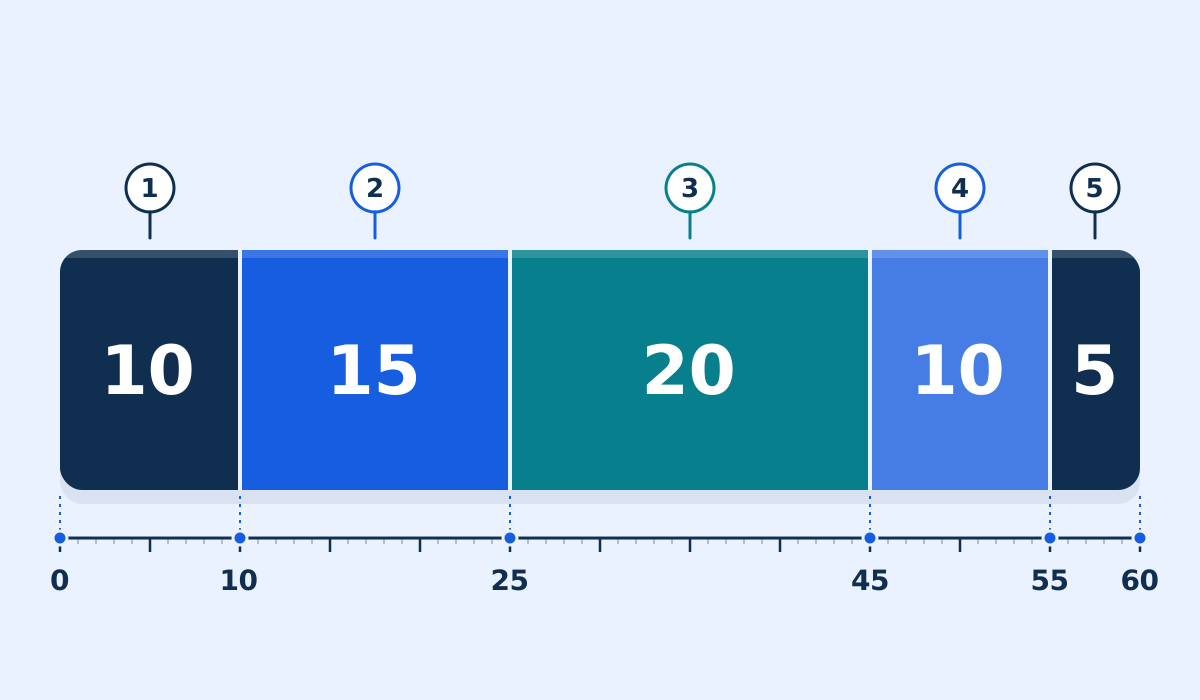
A sixty-minute planning example could allow ten minutes for orientation, fifteen for identifying issues, twenty for exploration, ten for options and five for a closing note. The total is sixty minutes. This is an illustrative allocation to discuss with the mediator. Different meetings need different timing. Confirm the duration booked and how an extension would be decided and charged. It helps to ask before the reserved time ends and another participant must leave.
Keep a record of issues reserved for later. Identify which need additional material, advice or a different participant. At the end, return to the list and note what was answered and what remains open. Decide whether a later discussion is wanted or whether individuals first need to make their own enquiries. This allows the agenda to remain useful after the appointment rather than becoming a forgotten list of ambitions.
Listen for information and prepare a follow-up question
While another person speaks, distinguish new information from points you want to challenge. A note with two columns can help you preserve questions without interrupting every sentence. Request an example or supporting record when something is unclear. If a figure surprises you, mark it for checking rather than trying to recall every related document immediately. Understanding the claim allows you to examine it accurately before deciding how you respond.
Briefly restating what you heard can reveal that the disagreement is different from the one you prepared for. You might ask whether the person wants a breakdown before confirming a payment date. They may explain that they accept the amount and only want a different transfer method. That answer changes the practical question. You can acknowledge what they are requesting while retaining your own questions about the information on which it depends.
If a statement makes participation difficult, ask the mediator for a workable adjustment to the conversation. You might request uninterrupted speaking time or a question framed around events instead of motives. Prepare a short sentence you can use under pressure. Describing the change you need gives the mediator something concrete to consider. Where the difficulty is more substantial, ask about an appropriate way to continue rather than trying to solve it through another accusation.
Request a break for a defined purpose
You can ask for time to read, check a calculation or consult an adviser. Explain what you need to do. Saying that you want to verify whether the table includes a payment already made gives the pause a practical purpose. Establish in advance how to contact a lawyer or another decision maker. Ask how a break affects the booked time and charges, particularly when it could require extending the appointment.
Return with the point clarified or the remaining question identified. You may discover that an amount is workable but its date is not, or that approval is required from someone absent. Explain what can be considered and what still needs investigation. If you cannot reach your adviser, say which point remains unanswered. Ask whether other matters can proceed while that particular clause is reserved for a later response.
If you cannot understand the proposal sufficiently to assess it, say what is preventing that understanding. Consider a readable version, further advice or another meeting. Keep any legal deadline separate in your own case planning and obtain advice about it where necessary. A private conversation being paused or rearranged does not establish that the deadline changed. Clear information about obligations outside the room helps you make an informed decision about continuing the discussion.
Test an offer against its implementation
Break a proposal into actions. Identify who does what, by when, through which method and subject to which earlier step. Closing the account could mean paying an amount, exchanging documents or ending a business relationship. Until the actions are specified, participants may understand the same expression differently. For multiple payments, record the amount and date of each. Clarify whether expenses outside the stated sum remain payable and how completion will be acknowledged.
For an arithmetic example, a NIS 6,000 balance could be divided into three NIS 2,000 payments. The participants still need to examine timing, receipt and practicality. If NIS 1,000 has already been paid, establish whether the proposed balance is before or after that payment. Keeping the earlier payment visible helps avoid counting it twice. Check that all participants use the same period and list of entries before a number moves into a draft.
Identify approvals and supporting information. Where an account check is required, ask who performs it and what they will receive. A proposal may answer one issue while leaving others open. Read the complete latest version, including amendments made during the conversation. Changing one date can affect another action. Assess the sequence as a whole and obtain advice on legal meaning where needed before deciding whether to accept a document.
Leave with a record you understand
Ask what was decided and the intended status of each document prepared. A question list, action note, draft for review and agreement intended to create obligations perform different functions. Read the content and check who is involved and whether another procedure or approval is needed. If a date or amount changed, verify that your copy reflects it. Check that referenced attachments and page counts match the version discussed before you leave.
When no complete agreement emerges, identify whether a useful next action was accepted. Someone may undertake to provide a record, examine an offer or consult another person. Check responsibility and timing to the extent agreed. If no action was agreed, note privately what you learned and what you want to investigate. Discovering who holds a missing record or who can approve an option can change how you prepare for the next decision.
The following day, compare the outcome with your original question. Record your own tasks and keep the received version organised. Before sharing a summary, consider what information you may appropriately convey to the intended recipient. The sharing tools let you select and edit the preparation list or questions produced here. Read the selected text before sending it, and update your preparation note using what actually became clear during the meeting.
Compare the cost of the appointment you are booking
Read the unit on each fee proposal. An hourly price for everyone together, an hourly price for each party, chargeable preparation and a minimum booking can produce different totals. The phrase introductory meeting alone does not establish that it is free. Confirm the reserved time, charged time, minimum and document-review arrangements. The mediation and arbitration fee guide covers wider prices. Use the calculator here for the immediate booking and replace its example inputs with the terms offered to you.
In an arithmetic example, ninety minutes at NIS 800 per hour for the whole meeting costs NIS 1,200. Adding thirty preparation minutes at the same rate makes the time charge NIS 1,600. Split equally between two parties, the total share is NIS 800 each. If a total advance of NIS 400 has already been paid for this booking, the combined remaining balance is NIS 1,200. The advance reduces the balance without changing the NIS 1,600 total. This assumes proportional minute billing and no additional minimum.
Another example uses NIS 450 per hour for each party. Ninety minutes costs NIS 675 per party or NIS 1,350 for two. A three-hour minimum would require a different booking calculation. Compare both proposals on the same VAT basis and establish what is included. These inputs illustrate arithmetic. Ask for the applicable quote for your appointment, including interpreting, fixed charges, cancellation, rescheduling, absence and extension arrangements. Keep the complete proposal and payment confirmation so you can identify what was paid and what remains due.