
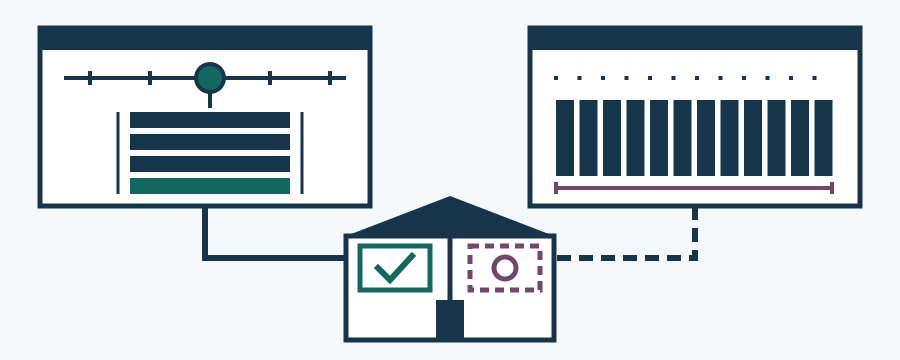
What Maya has in front of her
Maya teaches ceramics in Israel. She spent several years at a studio where she taught evening classes, then moved to a workshop that ran courses during the day. As she prepares to discuss pension savings with Tom, her former partner, she has an annual statement in Hebrew and a short English summary she made when it arrived. She remembers writing down the figure that seemed most important. Looking at the Hebrew again, she can see two figures. One is a balance in shekels. The other is also in shekels, but it describes a forecast of monthly pension at retirement. She has also spotted a difference between the date in her summary and the date beside the balance.
Tom has brought a letter from an older job. It describes a pension arrangement connected with that employment, but there is no fund balance anywhere on the page. He remembers who employed him and where he worked. He is less sure who kept the pension records. When Maya asks whether his letter and her statement show the same kind of thing, he reads it again. The letter refers to years of service. Her statement refers to savings accumulated in a fund. Even if both papers concern an occupational pension, they may describe it in quite different terms.
For Maya, the most useful place to start is the heading above the figures. The name of the studio may appear because it was her employer. The name at the top of the statement may be the provider that issued it. The product is the particular pension fund or policy the figures relate to. Knowing the studio’s name helps Maya trace her employment. Knowing the provider’s name helps her find the right place to ask about the statement. Neither name, on its own, identifies the product. A provider can administer more than one, and a change of studio need not have meant a change of fund.
Maya tests her understanding by setting the statement beside an old payslip of her own. The payslip connects the evening classes with pension contributions through that studio. The statement names the fund and identifies the period it covers. Taken together, the papers let her ask a narrower question than “Where is my pension from teaching?” She can ask whether the contributions associated with the first studio went into the fund named on the statement. A payslip from the second workshop might lead her back to that same fund. It might instead point to another product. Until she can tell which, she has two periods of employment to trace and one identified fund.
Which date goes with which amount
The date difference bothers Maya because the English summary is the page she expected to use in conversation. In this fictional example, the summary says “balance in March,” while the Hebrew statement gives a balance as of the end of December and shows a March issue date. Both dates can belong to the same report. March tells her when the document was produced. December tells her when the provider measured the savings shown on that line. Translating the title as “annual statement” did nothing to preserve that distinction. Her short phrase quietly moved the balance forward several months.
The words closest to the amount help her recover what she meant. On her statement, יתרה means balance, and ליום introduces the date as of which that balance is shown. Elsewhere, the report names the period covered by its account of contributions and other movements. That period can span a year even though the closing balance describes a single day. Maya can now explain the apparent discrepancy in a sentence. “I received the report in March. The figure I copied was the fund balance at the end of December.” If the Hebrew wording were unclear to her, she could ask the provider which date applied to that particular line.
Cover the figures with your hand and read the labels aloud. “Balance at the end of the reporting year” describes a single measurement of the savings in the fund. The money did not reach Maya’s bank account on that date. “Projected monthly pension at retirement” expresses an estimate of future monthly income under the assumptions of the statement. The second line can sit beside the first in the same annual report. Each still needs its own unit when she copies it into her notes.
A forecast also differs from a pension already being paid. A statement forecasting a monthly pension looks ahead. A payment statement looks back at a particular payment period and may distinguish the pension amount from the amount credited after deductions. If a document uses the word “monthly,” the question is whether it estimates a future month or records a payment for a month that has passed. Only the latter is evidence of a payment already made. Even then, the paper describes that payment. It does not establish a lump sum available to divide. Maya’s forecast and her dated balance give her no such household cash figure.
The date relevant to a discussion about separation may differ from every date on the front page. If someone asks Maya for the balance on a particular earlier date, a more recent statement cannot answer simply because it is the latest one she has. Contributions or other changes may have occurred in between. Nor does the earlier date, once identified, turn the balance beside it into a statement of either person’s entitlement. Maya can say exactly what her document supplies and ask whether the provider holds information for the date under discussion. That leaves the question of how the rights should be assessed open for the person doing that work.
Israel’s Capital Market Authority offers a free locator for inactive pension accounts. A possible match is a lead. The institution holds the information that confirms whether an account exists, its balance and the rights attached to it. Maya can enquire about her own record without obtaining Tom’s login details, and he can make his own request separately. The locator cannot tell either of them what share a former partner might receive.
When another envelope looks like another pension
While sorting her teaching papers, Maya finds a second envelope from the same provider. It has a different reference at the top, and for a moment she thinks she has found another fund. One reference, however, appears next to the subject of a letter answering an enquiry. The other appears next to the product details on the annual statement. A provider reference may identify correspondence, a request or some other record in the provider’s system. A policy number identifies a particular policy where that form of identification applies. The location and label matter more than whether a string of characters looks official.
Suppose the second envelope contains an updated report. If it describes the same fund and the same balance date, it may revise the earlier figure or supply information that was missing from the first version. If it gives a later balance date for the same fund, it may show how the same savings stood at two different times. Adding the balances would count the same rights twice. On the other hand, two statements issued on the same day under the same provider logo may concern distinct products. Maya can ask the provider whether the second document updates the first, follows it for a later period or describes a separate product.
A transfer between providers creates a different puzzle. An old statement might show savings with the first provider before a transfer. A later statement might show money received by the second provider. Both records can be accurate, yet part or all of what appears in the later balance may be the money shown in the earlier one. The words “transfer out” and “transfer in,” together with the product names and transaction dates, tell Maya more than the two closing balances alone. If the amounts or dates do not line up neatly, she can ask what moved and whether anything remained with the first provider. Similar figures alone do not prove a transfer.
An inactive product is another possibility. Maya may have stopped contributing to a fund when she left the evening studio, while savings continued to be recorded there. A notice that a product was closed raises a different question about what happened at closure, including whether there was a transfer. A missing statement says much less. It tells Maya there is a gap in her papers, without explaining the status of the product. Conversely, a duplicate statement fills an envelope while adding no new rights. Keeping those possibilities distinct matters when someone asks about a period of work for which she has only a payslip.
Maya can request her own information through the provider’s official service channel, using the identification process it offers. She can describe the product name, the reporting period and the line she wants explained without sending a full statement to an unverified address. If she knows only the studio’s name, its payroll contact may be able to identify the provider recorded for her employment at the time. The provider can then say what product information it holds for her. Tom can make his own enquiry about his letter. Neither person needs the other’s login to get a useful answer about their own paperwork.
What Tom’s employment letter can tell him
Tom’s letter names his former employer and describes service recognised under an older employment arrangement. The natural temptation is to look for the number that would go in the same space as Maya’s fund balance. But the letter may be evidence of benefit rights described through employment history and the terms of the arrangement. It may have been written to confirm a period of service, with no intention of stating a capital amount. A missing balance line does not make the letter worthless. Nor does it establish that a pot of savings exists somewhere in an amount Tom can read off another page.
Tom can make a more precise enquiry by quoting the description of the arrangement from his own letter. “This confirms service with my former employer. Who holds the record of the pension benefit it refers to, and what document would describe that benefit?” The employer may hold his employment history while another body administers or pays the pension. If the employer can identify that body, Tom has a place to ask what the benefit record actually measures. If the letter mentions a monthly amount, he can ask whether it was an estimate at the time of writing or a pension in payment for a specified period.
Preparing statements and obtaining a professional opinion serve different purposes here. The statements establish what the respective holders recorded, for which products or arrangements and on which dates. A professional opinion can consider what those records mean for the particular question being examined. For Maya, that might require distinguishing periods within the history of one fund. For Tom, it might require interpreting service information that has no direct counterpart on Maya’s statement. An opinion can explain its assumptions and identify information it still needs. Copying both people’s most prominent figures onto one page cannot do that work.
Registration by the payer is a distinct, later task where it applies. The payer is the body responsible for paying the relevant pension benefit. Asking that body for a statement retrieves information. A professional opinion interprets information. Registration concerns what the payer formally records on the basis of the relevant documents. An updated statement does not show that registration occurred, and delivery of an opinion does not confirm what the payer has registered. If registration comes up in conversation, a useful distinction is whether someone is describing an assessment already prepared or a record the payer can confirm it has actually made.
Questions that fit the paper in your hand
If your page resembles Maya’s, choose the question according to the point that is unclear. When two dates conflict, you might ask, “Which date tells me when the balance was measured, and which tells me when you issued the report?” When the word “monthly” catches your eye, a better question is, “Does this line forecast a pension at retirement, or does it record a payment for a month that has already passed?” Either answer gives you words you can use in conversation without presenting the figure as money available now.
When the uncertainty concerns identity, it helps to put both descriptions into the question. “One page names my former studio and another names a fund. Can you tell me whether the contributions from that job were recorded in this product?” If two documents came from one provider, you might ask, “Does the reference on this letter identify my enquiry or a separate policy?” If a provider changed, “Which record shows what left the earlier product, and does it show whether anything stayed there?” asks for a traceable event instead of treating a second envelope as a second balance.
For a letter like Tom’s, the useful choice may be between asking about the employment record and asking about the benefit. “What period of service does this letter confirm?” belongs with the holder of that history. “What kind of right does the arrangement record, and as of what date?” belongs with whoever holds the benefit record. And if the conversation turns to an opinion or registration, one question keeps the answer concrete. “Are we looking at what the provider reported, what a professional concluded from it, or what the payer has since confirmed in its own record?”
What date does the balance belong to?
If the discussion keeps circling back to a figure on a pension statement, try finishing the sentence in which it belongs. “Maya’s fund reports a balance of this much on this date” is a sentence the statement can support. “This is how much was in the fund when Maya and Tom separated” is a different sentence. It needs evidence about the fund at that earlier point. A figure can be accurate down to the last shekel and still answer the wrong question.
In Maya’s case, the annual statement in Hebrew gives an end of December date beside the balance. An English summary prepared earlier gives the end of June. Both dates in this example are fictional. Tom remembers June because it was near the time Maya moved from one ceramics studio to another. That makes June a memorable date. It does not explain what June meant to the person who wrote the summary. It might refer to the move, to a date discussed by Maya and Tom, or to a different document altogether.
The useful question for the meeting is quite narrow. “Does the Hebrew statement say what the fund held in June, or does it say what the fund held in December?” Here it says December. Maya can say that with confidence while leaving the reason for the English date open. In the meeting notes, the December figure can stay attached to its December label. June can remain beside the English summary with the discrepancy visible. Quietly changing one date to match the other would make it harder to see why the earlier balance is still unknown.
Even “present balance” needs a little care. Maya may use it to mean the balance on her latest annual statement. Tom may hear it as the balance on the day of the meeting. If the statement closed in December and the conversation is taking place later, those descriptions point to different moments. Calling it “the balance at the end of December” gives the figure a stable meaning. Everyone can then discuss whether December is relevant without also having to guess what Maya meant by “present.”
Tom’s letter raises a separate question. It comes from an older employment arrangement and refers to a pension linked to service. Before anyone puts a number from it beside Maya’s balance, it matters whether the letter describes accumulated money, a benefit calculated under the arrangement, or an illustration of a possible payment. The name of Tom’s former employer identifies where he worked. It does not, by itself, identify the product or tell the meeting what kind of figure the letter contains. For now, the letter can be discussed on its own terms.
Two figures that look easier to compare than they are
Suppose Maya copies two headings into English. She renders יתרה צבורה as “accumulated balance” but leaves out the date. On another line she writes “expected pension at retirement” and drops the word חודשית, meaning monthly. Both translations look plausible. Neither is sufficient for comparing reports. Returning to the Hebrew allows her to restore the date beside the balance and the words “per month” beside the forecast. She can then keep a copy of the original so that her adviser can check the translation.
The first extract gives one amount at one point in time. “Lump sum balance” describes how the figure is expressed on the page. It does not say that Maya received a lump sum or that the household has that money available to spend. The second extract describes the size of a possible monthly pension in the future. It does not record a payment Maya receives now. The two lines can sit together on a statement because they describe different things about the same fund. Neither is a second pot of household cash.
Suppose Tom says, “I understand the monthly amount, but where does the rest of the balance go?” His question assumes the forecast is an instalment taken out of the printed balance in a way the two extracts explain. They do not. A better question about the forecast is, “What did the provider assume about Maya’s future work and contributions when it produced this figure?” Her move between studios makes that question concrete. A forecast that assumes continuing contributions describes a different future from one based solely on what had accumulated by December. The extracts alone do not say which future was assumed.
Tom might find the word “monthly” in his own letter and think he has found a direct comparison. But a monthly figure can be a forecast, an amount described under the terms of an older arrangement, or a payment already in progress. If the letter says a pension *would be payable* at a future point, calling it “Tom’s monthly income” changes its meaning. If it records a payment for a particular month, that is evidence about that payment. Even an actual monthly payment is not a lump sum available to the household. The wording of the letter determines which question the amount can answer.
For this meeting, Maya can read her two lines aloud without shortening either one. Tom can describe his line using the verb the letter actually uses. That small exchange makes the missing information audible. “The fund held” calls for a date. “The fund projects” calls for assumptions and a future point. “The arrangement paid” calls for a payment period. There is no need to add the two units or convert either one into the other to find out whether the documents describe comparable things.
The Israel Tax Authority distinguishes savings accumulated as funds from arrangements that accrue benefit rights. It gives a budgetary pension and an old pension fund as examples of the latter. A shekel balance on one page and a forecast per month on another do not, on their own, classify the arrangement. Ask the paying body to identify the product and explain which figure it is reporting before commissioning a professional to value anything.
What happened between the earlier date and December?
Put the English summary aside for a moment and consider the question behind it. Maya and Tom want to discuss savings over a particular period. Maya had already worked and saved before that period began. She also taught classes after the earlier date they are discussing. Her December balance reflects the fund at the end of December. It does not mark which savings were already there at the start of the period or explain everything that happened after its end.
The move between studios illustrates the problem. Maya remembers teaching her last class at one studio in June and starting at the next later that year. A contribution appearing after June might relate to work done before the move. Equally, it might relate to work done later. The date money appears in the fund and the period of work it relates to answer different questions. Maya’s memory of her last class helps identify what needs explaining, but it cannot establish the period covered by an individual entry.
Tom asks, “If we can see the later contributions, can we just take those out and call what is left the June balance?” That would treat all movement in the balance as contributions. A fund balance can also change with investment results, charges or money transferred into or out of the product. Even if each later contribution were clearly labelled, the December balance and those entries alone would not necessarily reproduce the balance in June. The meeting can acknowledge the later contributions without manufacturing an earlier figure from incomplete information.
Pre-existing savings pose a related but different problem. Suppose a statement shows that Maya brought money into the fund around the time she changed studios. The date of the incoming transfer would show when the receiving fund recorded it. It would not show when the money was first accumulated. Treating the entire transfer as new savings from teaching at the second studio would confuse a change of product with a new period of work. Treating it all as savings from before the relationship would also go beyond the evidence.
A useful way to capture the discussion is in Maya’s own words. “I can explain when I changed studios. I can see that the December figure includes activity after June. I still don’t know what the fund recorded at the earlier date.” That leaves a precise question for her provider. “Can you identify the balance your records show for the June date in the English summary?” The answer might be a dated balance, an explanation of the period the provider can report, or confirmation that the summary refers to something else. None of those answers decides how the savings are to be treated between Maya and Tom.
What an actuarial opinion would actually compare
An actuarial opinion can address a question the statements cannot answer by themselves, but its usefulness depends on the question it was asked. “Compare our pensions” leaves a great deal open. In Maya and Tom’s case, it could mean examining the history of Maya’s accumulated savings, interpreting a service related benefit described in Tom’s letter, or assessing both products with reference to a specified date. Those are distinct pieces of work. An opinion covering Maya’s fund alone would leave Tom’s arrangement outside its conclusions, however detailed the calculations for Maya might be.
The first thing Tom wants to know about an opinion is often the result. For this meeting, the more revealing passage would be the one explaining exactly what was assessed. Does the opinion identify Tom’s older arrangement by name? Does it treat the letter as evidence of a benefit linked to employment, or assume there is an account balance behind it? If the letter only describes a possible future monthly benefit, the opinion needs to make clear what information supports its treatment of that benefit. Silence on that point leaves the comparison difficult to interpret.
The date on the cover of an opinion is usually easy to spot. The date that matters for understanding a figure may be inside it. An actuary could write an opinion well after December while examining Maya’s position at an earlier date. The report might also discuss a future pension expected to begin later. The date of writing, the date being assessed and the future point to which a projection refers each have their own job. Reading them as one date could make a historical assessment look current or turn a future amount into apparent present income.
Assumptions deserve the same attention as dates. Suppose the opinion discusses Tom’s benefit on the assumption that his service ended when he left the workplace. Tom remembers a later period that the letter does not mention. That does not establish that the later period counts. It does identify a specific dependency in the opinion. The unanswered item for the actuary could be, “Does the result you report for Tom depend on treating his service as ending on the date in this letter?” An answer would tell the meeting whether the remembered period could change the assessment and where the existing evidence stops.
The same care applies to the result itself. If an opinion quotes Maya’s December balance in NIS and also reproduces her projected pension in NIS/month, both lines should retain their units and their source. A figure copied from a provider’s forecast has a different basis from a figure the actuary independently assessed. Maya should be able to read a sentence in the opinion and tell whose figure it is, what date it describes, and what assumptions it carries. If an answer to any of those questions is missing, the larger type or more precise number on the page does nothing to resolve it.
What can be settled in the meeting
By the end of the discussion, the December date in Maya’s Hebrew statement is settled as a matter of reading. The balance belongs to that date. The monthly forecast is a separate description of a possible future benefit. June still matters because it appears in the English summary, but there are two different questions about it. One is factual and concerns what Maya’s provider recorded then. The other concerns whether June is the appropriate reference point for the divorce discussion at all. A provider could answer the first without being in a position to answer the second.
That second issue gives the lawyer one specific unanswered item. “Which date is relevant to the question we are discussing, given that the June date appears in the English summary and the Hebrew statement reports a December balance?” A lawyer may need more context to address it. What matters here is that a translation discrepancy gets presented as a discrepancy. Nobody has to defend June merely because it appeared in English or defend December merely because it appears on the fund’s statement. December can be the correct date for the printed amount while another date is relevant to the discussion.
It also helps to distinguish what the paperwork does at different points. A statement describes what the provider records or projects. A professional opinion explains an assessment within its stated scope. Later registration by the pension payer, where applicable, concerns what the payer actually enters in its records. A statement or an actuarial opinion cannot confirm that the payer has made that entry. If the question later becomes whether registration has occurred, the relevant answer is confirmation from the payer about the particular arrangement. Tom’s employment letter and Maya’s forecast answer other questions.
Maya and Tom can close this meeting with a modest but concrete result. Maya’s fund has a dated balance and a separate monthly projection. Tom’s letter describes an older arrangement whose treatment depends in part on what his recorded service covers. The provider question concerns the earlier recorded balance, the actuarial question concerns the service assumption, and the legal question concerns the relevant date. Each person hearing one of those questions can see exactly what prompted it. The next conversation can begin with the answer that came back, with its date and unit intact.
When the summary and the ruling carry different dates
Maya is trying to answer a small but consequential question. The English summary in front of her says that her pension fund balance was reported at the end of June. The annual statement in Hebrew says 31 December. She teaches ceramics in Israel and moved between studios during the year, so either date sounds familiar. June was when she left one studio. December was the end of the year covered by the statement. What she wants to know is which date went with the figure discussed and which document the pension institution later received. Maya and Tom are fictional, and all dates and amounts in their story are examples, not averages or promises.
It helps Maya to read the English summary for what it actually contains. It gives a short account of the arrangement she and Tom discussed and repeats a figure from her fund. It does not reproduce the judicial ruling. The ruling has its own date and wording and may refer to another document. If the copy in front of Maya refers to an attachment she cannot see, the summary can help her identify what to ask about. It cannot tell her what was in the attachment. Likewise, the date on which a ruling was delivered does not, on its own, tell her the date at which a pension amount was measured.
Tom’s letter raises a different reading problem. It comes from an older employment arrangement and describes a pension benefit by reference to service. The letter identifies the arrangement, but it gives no single figure for a pot of accumulated money. Maya’s balance and Tom’s benefit therefore cannot be compared just by choosing the most prominent number on each page. Tom can describe what his own letter says and what it leaves open. If it quotes a monthly amount, the surrounding wording matters. A monthly forecast, a description of a benefit earned through service and a payment already appearing on a pension payment statement are three different things.
The statements, a professional opinion and the ruling each have a distinct use here. A statement supplies the institution’s description of a particular product at a particular date. A professional opinion can explain how its author used the evidence, including whether a value for June was calculated from other material. The ruling shows what was actually decided. Maya’s question to the person who prepared the English summary is quite narrow. “Was June the date used in the opinion, or did June enter the summary when the December balance was copied?” The answer might explain both dates without changing either document. It still would not establish what the paying body had recorded.
Israel’s Division of Pension Savings Between Separated Spouses Law addresses implementation through the paying body of a division set out in a pension division judgment. A request to record the judgment and a notice that the details have been recorded are separate events. If all you have is confirmation that a file was delivered, keep it with a note of what it contained. You can then ask whether the details were recorded, whether anything is missing and what recording means for that particular arrangement.
What the paying body has actually confirmed
Once a ruling has been delivered, the question moves from what the papers say to what the institution responsible for the product has received and done. Suppose Maya has a message saying that the ruling was sent to her fund. The sender can tell her which file was sent, to whom and for which product. That is evidence about reporting the matter to the fund. A response from the fund can establish something the sender cannot confirm from a sent message alone. Even then, the words of the response matter more than its reassuring tone.
An acknowledgement might say, “We received your request and opened a case.” That gives Maya something concrete to refer to in later correspondence. It does not say which pages were readable, whether the product was matched or whether a notation has been entered on its record. If the message identifies only Maya and the institution, a useful question is, “Can you confirm which pension product this case concerns?” One institution may administer more than one product. Recognition of a person’s name is less specific than confirmation that the request is being considered against the intended product.
A later message might say that a notation has been recorded against the product. Now Maya knows something about the pension record itself. She can ask which ruling the notation refers to and whether the message describes any further action. A notation is an entry on the institution’s record. Execution is the carrying out of an action. A reply that confirms an entry may be a complete answer to a registration question while saying nothing about a payment or another action under the arrangement. There is no reason to infer from the word “recorded” that money has moved.
This distinction can be hard to hear on the telephone. “It has been processed,” a representative says. Maya might reply, “By processed, do you mean that you received the papers, that you entered the notation, or that you carried out an action under it?” If the representative says an action was carried out, Maya can ask what action and which document confirms it. If the representative can see only incoming correspondence, that too is a useful answer. It identifies the limit of what this conversation can establish and leaves a precise question for the team that maintains the pension record.
The date on a reply needs the same care as the date on a statement. A confirmation issued in March might describe a notation entered in February and refer to a ruling delivered earlier. Those dates belong to different events. None replaces the reporting date beside Maya’s fund balance or explains the June date in the English summary. In conversation, “the March confirmation of the February entry” conveys more than “it was done in March.” It also makes it easier to notice when the only dated event anyone can support is receipt of the request.
A missing original and a field that does not match
Suppose the fund replies that the original is missing. Maya has the original Hebrew annual statement and a copy of the judicial ruling, so the word “original” alone leaves her guessing. The fund might mean the Hebrew document behind the English summary, a particular version of the ruling, or an attachment mentioned in the ruling. These are different gaps. “Which document are you referring to, and what did you receive in its place?” leaves room for the institution to identify the missing item and explain what form it can accept for this request.
The answer may be simpler than it first sounds. In this example, the fund says it received the ruling but cannot see the attachment named on its last page. The sender’s copy includes that attachment. It is now possible to distinguish a missing page in the material received from a page missing in the sender’s own file. The relevant follow up is whether the institution has since received the attachment and associated it with the existing case. Confirmation that an additional file arrived still leaves open whether the fund has examined it or entered a notation.
An identifying field can cause a different kind of hold. Maya’s English summary uses the name of the studio where she taught, while her Hebrew statement gives the name of the pension product. A representative says the product name on the request does not match the fund’s record. Before anyone describes this as an error in the ruling, it matters where the studio name actually appears. Is it on the covering request, in the English summary, in the ruling itself or in the institution’s own entry? Correcting a covering description would answer a different problem from a discrepancy in the ruling.
Maya can ask the representative to name the field in question and identify the document carrying the disputed wording. If the mismatch is in the covering request, the fund can explain how it handles a correction there. If the wording appears in the ruling, the representative can identify what the fund cannot match. That response does not decide how the ruling should be read or changed. A corrected English summary would clear up the translation for its readers, but would not change the Hebrew statement, the ruling or an entry already made by the institution.
Responsibility for follow up is easiest to establish in terms of a particular unanswered question. Someone who agreed to forward the attachment may have done exactly that without agreeing to check the eventual notation. A professional who explained the June valuation may have had no part in reporting the ruling. “Who is expecting the fund’s reply about the product name, and who will tell Maya what it says?” is more useful than “Who is handling the pension?” It identifies the loose end without assuming a duty that nobody has agreed to take on.
For certain transfers to a new provident-fund annuity account in a former spouse’s name, the Tax Authority describes a withholding route that depends in part on a pension clearing-system balance-for-distribution report and the applicable ceiling. If the required report is missing or the ceiling is exceeded, its guidance directs the issue to the tax assessor. An ordinary annual statement does not automatically serve as the dedicated report. Check which conditions apply to the transaction before putting a tax figure in a household budget.
Two institutions give two different answers
In Maya and Tom’s example, the same ruling refers to Maya’s pension fund and the older arrangement described in Tom’s letter. Each institution has received a request concerning its own product. Maya’s fund replies that it has recorded a notation. Its confirmation identifies her fund, gives the date of entry and refers to the ruling. It says nothing about execution. Maya can accurately describe her position in one sentence. “My fund confirms the entry, and its letter does not report any further action.” That is a more useful account than saying that the whole pension matter is finished.
Tom receives a different reply concerning his older arrangement. The institution acknowledges his request and says it has referred the papers to the team responsible for that arrangement. Its reply names the arrangement but gives no date of entry and makes no reference to a notation. Tom can say, “They have identified the arrangement and received my papers. I’m waiting for an answer about the entry.” He can clarify the status through his own correspondence. Maya can explain what her own fund has confirmed without trying to obtain access to Tom’s records.
The difference need not indicate a contradiction. Two bodies have described two different events concerning two different products. If someone asks whether “the ruling has been registered,” an unqualified yes would go beyond Tom’s letter. An unqualified no would overlook Maya’s confirmation. The useful answer names each institution and the event it confirmed. It also preserves a distinction that may matter much later. Tom’s letter describes how his older arrangement expresses a pension benefit. The acknowledgement from the institution concerns the handling of a request. Neither document supplies the information the other was written to convey.
Tom has a question about tax, too. “Is that why the institution hasn’t confirmed the entry?” he asks. Nothing in the acknowledgement gives that reason. The product question is what the institution has recorded and what action, if any, its administration of this particular benefit involves. The tax question concerns the treatment of a specific payment or transaction, once that payment or transaction has been identified. A tax explanation cannot confirm an entry in a pension record. Equally, confirmation of an entry does not tell Tom how tax would be handled if a payment were later made.
That separation also helps Maya read the forecast on her own statement. A question about whether the monthly figure is a projection or a current payment can be answered by identifying what the product statement describes. Treating the figure as a payment and then trying to estimate tax on it would skip the very fact in doubt. If a later document does describe an actual payment, its wording and period give a concrete basis for a different conversation. Until then, the evidence supports the forecast on the statement and the notation confirmed by the fund, each on its own terms.
The remaining verification can be brief. Tom could write to the institution that sent his acknowledgement, “Your reply identifies my older employment arrangement and confirms receipt of the request concerning the ruling. Would you confirm whether a notation has been entered for that arrangement? If it has, please identify the ruling and the date of entry, and say whether your record shows any action already carried out. If you are still waiting for a document or a correction, please name the item and say who will receive your response.” The request asks the institution to verify events in its own record. It leaves the value of the benefit and what either person is owed outside the question.